


Why Did My Skin Change So Fast? A Doctor's Honest Guide to Menopausal Skin at Bella Medica
“Why does my skin suddenly feel so different?” It’s a question I hear from many women in their late 40s and 50s. They describe dryness, dullness, a slack feeling, skin that seems thinner, or lines appearing faster than they expected.
If this sounds familiar, I want to reassure you: these changes can happen around perimenopause and menopause, and they are largely hormone-driven. They don’t mean you’ve failed at skincare or done something wrong. Skin can change even when you have kept the same routine.
What is happening to my skin?
Oestrogen plays a part in maintaining skin structure and moisture. As levels fall, the skin’s collagen, elastin and hyaluronic acid can be affected. These help support firmness, elasticity and the skin’s ability to hold water. Sebum, the skin’s natural oil, can also decrease, which may contribute to dryness.
A 2025 open-access review in the Journal of Cosmetic Dermatology describes how these changes may occur around menopause. It reports average collagen decline of about 2.1% per postmenopausal year, and a fall in skin thickness of around 1.13% a year over the first 19 years after menopause. The review also notes that sebum production drops by roughly 40% by the sixth decade.
These are averages, not predictions for any one person. Skin, hormone patterns and life experiences differ widely. The review helps explain why changes can feel quick, but it doesn’t mean everyone will notice the same symptoms or at the same pace.

Does HRT improve menopausal skin?
This is an important question, and the honest answer is that the evidence is not straightforward. The review notes that hormone replacement therapy (HRT) has been associated with improvements in skin thickness, elasticity and collagen, particularly when started near menopause. But studies have not all found the same results.
Clinical guidance does not support using HRT solely to improve skin. HRT decisions need to take account of your overall health, symptoms and personal circumstances, not just your skin. Please speak with your GP or a menopause specialist if you want to discuss it. I do not prescribe HRT at Bella Medica, and the treatments I offer are not a substitute for it.
For general information, you can visit the NHS menopause guide.
What can we realistically do at Bella Medica?
At Bella Medica, I focus on supporting skin quality, not promising to reverse hormonal changes or cure them. A plan might begin with medical-grade skincare: I work with brands including Obagi, Neostrata and Esse, and with GetHarley. The right routine depends on your skin and what it can comfortably tolerate. You can read more about our skin treatments.
Skin boosters are another option we may discuss. They are intended to support hydration and skin quality; they are not the same as dermal fillers. Profhilo is one of the options available at the clinic, alongside L’Esthetic, Jalupro and Sunekos.
Microneedling creates controlled tiny channels in the skin, with the aim of stimulating the skin’s own collagen response. It can be considered on its own or with a skin booster. A separate conversation is needed if your main concern is facial volume loss: dermal filler may be considered for volume, but it is not a fix for skin texture.
These treatments do not work overnight. Any changes develop over weeks, and a course may be recommended depending on your skin and chosen treatment. I agree the plan with you at consultation rather than assuming one approach suits everyone.

What should I know about results and safety?
There is no guaranteed result, and individual responses vary. Skin boosters can cause small bumps and bruising. Microneedling commonly involves redness and mild swelling for a few days, so you’ll need to allow time for your skin to settle.
I would pause treatment if you are pregnant or breastfeeding, have an active infection or inflammation in the area, or have unexplained or rapidly changing skin symptoms. In those situations, speak to your GP first. Some skin concerns around menopause, such as very itchy or inflamed skin, may be medical rather than aesthetic and deserve proper assessment.
What happens at a consultation?
Consultations are complimentary and come with no obligation to proceed. You can meet me online or in person. I’ll ask about your health history, assess your skin and listen to what has changed and what you’d like help with. I’ll explain options and limitations, and I’ll tell you honestly if I don’t think a treatment is right for you.
Our appointments are one hour. If you go ahead with a procedure, you’ll receive aftercare advice, and you can contact Dr Nabilah’s post-procedure advice line on 01254 948849.

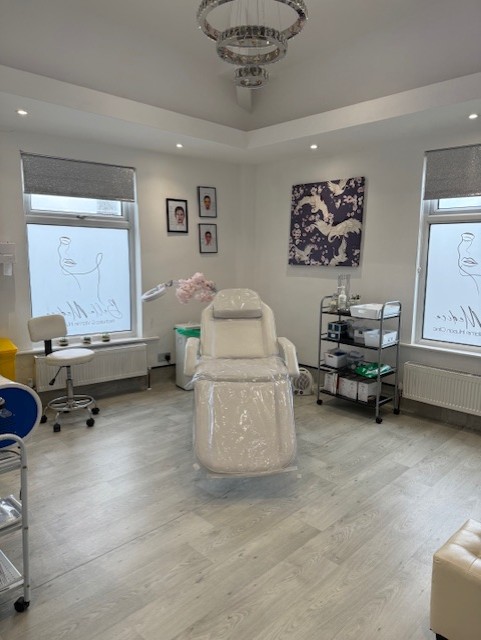
Genuine photo of our treatment room in Lancashire.
Menopausal skin treatment prices
Current prices are:
Profhilo: two sessions from £550
L’Esthetic skin booster: £300 per session
Jalupro skin booster: £250
Sunekos skin booster: £300
Microneedling: £200
Microneedling with skin booster: £350
My aim is to help you understand what may be happening and discuss realistic options without pressure. If you’d like to talk through your skin concerns, book a complimentary consultation, or contact Bella Medica to find out more.
Comments